
Janitor: Interactive Stories
janitoraiBooks & Reference
4.31.35K Reviews
- Version
- 2.8.3
- Installs
- 1.00M
- Age Rating
- Mature 17+
Screenshots

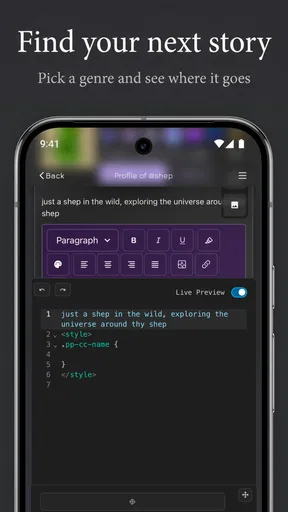
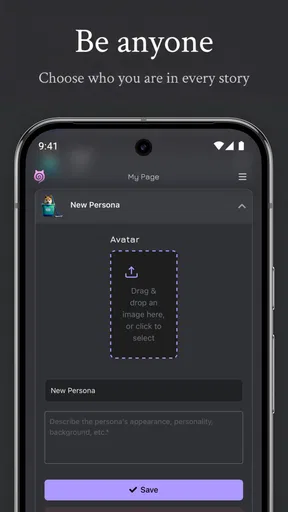
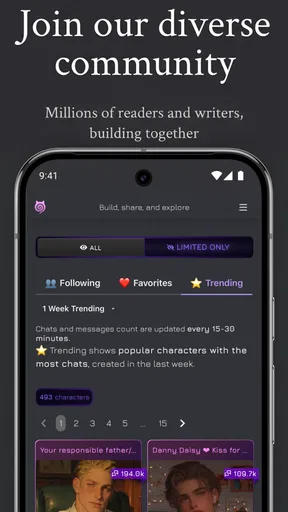
Our Review of Janitor: Interactive Stories
 Analysis by Appyee
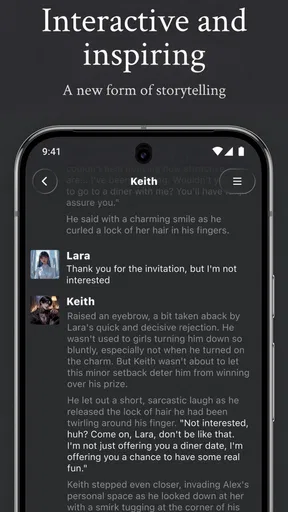
Janitor: Interactive Stories is the kind of reading app I open when I want something more responsive than a finished novel. Instead of following one fixed plot, I can enter AI-generated conversations and help steer stories toward romance, fantasy, fanfiction, or other mature themes. That freedom is its main attraction, but it also changes what “reading” means: I am not only consuming a story, I am testing how well the app reacts to my choices.
My first impression is that this is better understood as an interactive fiction companion than as a conventional digital bookshelf. The app sits in Books & Reference, yet its appeal comes from participation. I can shape the direction, tone, and relationship dynamics of a scene rather than simply turning pages. That makes it especially interesting for readers who enjoy improvisation, roleplay, and character-driven exchanges.
It is free to install, although individual in-app purchases are listed at $12.99 per item. The mature 17+ rating matters here because the themes and conversations are not aimed at children. I would treat that age label as a real boundary, not a minor store detail, particularly if the device is shared with younger family members.
How Janitor: Interactive Stories feels in everyday use
I find that the everyday experience depends as much on what I bring to a story as on the app itself: a clear intention, a few steady character details, and a willingness to steer when a scene wanders. That makes it useful to think about the choices a reader can make before sharing personal material or settling into a longer roleplay. The next section looks at trust and the practical boundaries I would keep in mind.
Speed expectations when a story is being generated
The most important performance question is not how quickly a library opens; it is how smoothly the app handles an ongoing AI exchange. Every time I send a meaningful reply, I expect the next part of the scene to be produced rather than retrieved like a normal ebook page. That naturally makes the experience feel more conversational and less predictable than reading in Kindle, Google Play Books, or a standard fanfiction reader.
For a relaxed evening session, that pause can actually help. I have time to decide whether my next message should advance the plot, challenge a character, or quietly change the mood. The app works best when I treat the exchange as collaborative writing instead of demanding the instant rhythm of a messaging app.
There is also a useful distinction between perceived speed and story quality. A very fast response is not automatically a good one if it ignores the scene or rushes a relationship. With interactive AI fiction, I pay attention to whether the reply understands the immediate context. A slightly slower but coherent continuation is more valuable to me than a quick paragraph that forces the story in a strange direction.
If you are comparing it with a conventional reading app, expect a different rhythm. A normal ebook is dependable because the text already exists. Here, the experience depends on the conversation, so the sense of momentum comes from your prompts as much as from the application itself. Short, focused messages usually make more sense than sending a huge block of instructions every time.
What happens during longer or heavier sessions
Heavy use for me means staying inside one story for a long time, repeatedly changing direction, and asking the characters to remember details introduced earlier. That is where interactive fiction becomes more demanding than ordinary reading. I am not just scrolling through pages; I am maintaining a thread of context and deciding how much information to repeat when the scene moves somewhere new.
A practical workflow is to keep a small mental or written note of the facts that matter most: the relationship between the characters, the current location, an unresolved promise, and the tone I want. If a scene starts drifting, I can bring those anchors back into my next message. This is more effective than blaming the app for every weak continuation, because AI storytelling responds strongly to how clearly the reader frames the moment.
Another useful habit is to separate direction from dialogue. I might first explain that I want a tense but respectful conversation, then write the character’s actual line. That gives the story a clearer target than mixing several unrelated requests into one sentence. It also makes it easier to recover when a character suddenly behaves out of character.
Long sessions can feel heavier simply because more is happening in the conversation. I would not choose this as a background reading app while multitasking heavily. Its value comes from paying attention and making decisions. If I only have a few minutes, a finished article or audiobook is more predictable; if I want to play with a scene for half an hour, this format becomes much more rewarding.
Reliability and recovering from an awkward continuation
Reliability here is not only about whether the app opens. It is also about whether a story remains usable after an imperfect response. AI fiction can occasionally take a character in an unwanted direction, misunderstand a prompt, or lose the emotional balance of a scene. I judge the app by how easily I can redirect the exchange without throwing away the whole idea.
The best recovery method is usually a calm correction rather than a long complaint. I can state what should remain true, what needs to change, and where the scene should resume. For example, I might clarify that the characters are still friends, that the setting has not changed, and that the next reply should focus on their disagreement. Specific corrections are easier to act on than “write it better.”
This is one of the app’s biggest trade-offs compared with fixed fanfiction. A traditional story cannot suddenly misunderstand my instruction because it never receives one, but it also cannot adapt to my preferred direction. Janitor: Interactive Stories gives me control at the cost of occasional unpredictability. I enjoy that exchange when I am in the mood to guide the writing, but I would skip it when I want an author’s fully controlled structure.
I also recommend treating mature interactive conversations thoughtfully. The 17+ rating signals that the app is intended for adults and older teens, but age suitability is not the only consideration. A reader should be comfortable with the themes they choose and should avoid treating an AI character as a substitute for real emotional support. For me, the healthiest use is creative entertainment: exploring fictional scenarios while keeping the boundary between roleplay and real life clear.
Device constraints and everyday practicality
The app supports Android 7.0 and later, which makes it accessible on a broad range of Android phones and tablets. That does not mean every older device will feel equally comfortable during extended sessions. Screen size, keyboard quality, available storage, and general system condition can matter more here than raw reading performance because the experience depends on typing and reviewing a growing conversation.
On a small phone, long exchanges can become tiring to navigate, especially when I am trying to compare an earlier character detail with the latest reply. A larger display is more comfortable for story planning, while a physical keyboard can make a noticeable difference for anyone who writes detailed prompts. If I were choosing between an old phone with a cramped screen and a newer tablet already in the house, I would prefer the larger display for serious sessions.
Resource demands are also tied to usage style. Reading a short exchange should be lighter than maintaining a lengthy, constantly evolving story. I would avoid opening many unrelated apps at the same time on a low-end device, not because the app is confirmed to be unusually demanding, but because interactive sessions involve repeated input, generated text, and sustained screen time. Keeping the device reasonably maintained is sensible.
Storage is another everyday consideration. Text itself is not usually as space-hungry as video, but I still prefer to keep room available for the operating system and other apps. I would not install it on a phone that is already struggling with nearly full storage, particularly if that phone is also used for photos, messaging, and work.
Battery expectations should be equally practical. A long conversation keeps the display active and encourages frequent typing, so a multi-hour session will naturally use more battery than reading a downloaded book with the screen dimmed. I see this as a consequence of the format rather than a special promise or flaw. For travel, I would charge first and avoid relying on it as my only entertainment if battery life is already limited.
Who will get the most from the app
I think the strongest audience is a reader who wants agency. If you enjoy romance with branching emotional possibilities, fantasy scenes that respond to your decisions, or fanfiction-style character interactions, the app offers a more active experience than browsing finished stories. It is also useful for people who like writing prompts but do not want to begin with a blank document.
A realistic everyday scenario would be using it after work to unwind with a continuing fantasy conversation. I might spend a few minutes setting the scene, guide the characters through a disagreement, and then stop at a natural pause. The next day, I can return with a clear idea of what I want to explore. That makes the app feel closer to an ongoing creative hobby than a disposable five-minute reader.
It can also help someone experiment with dialogue. I can test whether a character sounds shy, sarcastic, formal, or guarded, then adjust my prompts to see how the exchange changes. That is not the same as professional writing software, and I would not use it as a replacement for editing, but it can be a playful way to discover how different conversational choices affect a scene.
On the other hand, I would not recommend it to someone who wants authoritative reference material, carefully sourced nonfiction, or a finished novel with a guaranteed ending. The Books & Reference label may suggest a traditional reading tool, but the central experience is imaginative and interactive. Someone looking for textbooks, manuals, or dependable offline reading should choose a purpose-built alternative.
How it compares with familiar reading alternatives
Compared with Kindle or Google Play Books, this app offers far more participation but far less certainty. Those services are better when I want polished prose, stable pagination, and a story that will not change because of my next sentence. Janitor: Interactive Stories is better when I want to influence the scene and accept that the result may be uneven.
Compared with a conventional fanfiction archive, it provides a more immediate back-and-forth. I do not have to wait for an author to publish the exact continuation I want; I can ask for a direction and see what develops. The trade-off is that generated writing may not have the same deliberate structure, voice, or continuity as a human-written work that has been revised.
Compared with general chatbot apps, its identity is more focused on interactive stories and character-led scenarios. That focus is useful if I am opening the app specifically to read and shape fiction rather than asking broad everyday questions. A general assistant remains the better choice for practical research, planning, or factual explanations.
The choice therefore depends on what I value most. If control and improvisation come first, this app has a clear reason to exist. If consistency, source quality, and a completed narrative matter more, the usual reading alternatives remain stronger.
Version, availability, and what to expect before installing
The current version is 2.3.0, and the developer is janitorai. The app has passed the million-install mark and holds an average rating of 3.3 from around ten thousand ratings, with roughly eight hundred and fifty written reviews. Those figures suggest meaningful interest, but they also tell me to keep expectations realistic rather than assuming the experience will satisfy every reader.
The free entry point makes it easy to test whether interactive storytelling suits me before spending anything. At the same time, the listed $12.99 price for an individual in-app item means I would check what I am buying and whether it improves the particular experience I want. I would not treat a purchase as a guarantee that every generated exchange will suddenly become perfectly consistent.
Before installing, I would ask myself three simple questions. Do I enjoy typing, rather than only reading? Am I comfortable with mature themes? And do I have enough patience to redirect a scene when the first continuation is not quite right? If the answer to all three is yes, the app is much more likely to feel engaging than frustrating.
My performance verdict after weighing the trade-offs
Janitor: Interactive Stories is not a replacement for a polished ebook reader, and I would not judge it by the same standard. Its performance is best understood through responsiveness, continuity, and how manageable a long conversation feels on the device. The format naturally introduces pauses and occasional unevenness, while the need to type and guide the story makes it more demanding than passive reading.
What keeps me interested is the control. I can turn a basic premise into a personal scene, test different emotional directions, and return to a fictional exchange that feels shaped by my choices. The most effective approach is to use concise prompts, preserve the important story facts, and correct drift with specific instructions. Those habits make a bigger difference than simply sending more text.
I would recommend trying it if you want interactive AI fiction with a mature, participatory style and you are willing to accept that improvisation includes imperfections. I would skip it if you need fixed stories, dependable reference content, or a low-effort reading session that works without any creative input.
For me, the app succeeds as a flexible storytelling playground rather than a traditional digital library. Its free starting point, broad Android compatibility, and focus on romance, fantasy, and fanfiction make it easy to explore. Just approach it as a conversation you help direct, not as a finished book waiting to be consumed. That expectation is the key to getting the most from Janitor: Interactive Stories.
Privacy and Permissions
See what permissions an app requests and how it handles your data.
- Photos/Media/Files
- read the contents of your USB storage, modify or delete the contents of your USB storage
- Storage
- read the contents of your USB storage, modify or delete the contents of your USB storage
- Camera
- take pictures and videos
- Other
- view network connections, full network access, run at startup, control vibration, prevent device from sleeping, Google Play license check
Verdict
Strengths of Janitor: Interactive Stories
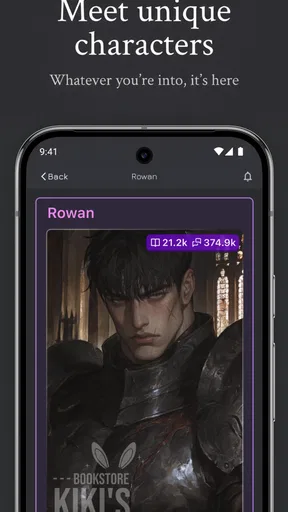
- Wide range of user-created stories across many genres
- Interactive choices make conversations feel personal and dynamic
- New characters and scenarios are added regularly
- Flexible roleplay supports creative, open-ended conversations
- Simple interface makes browsing and starting chats quick
Limitations of Janitor: Interactive Stories
- Story quality can vary considerably between different creators
- Some conversations may include mature or sensitive themes
- AI responses can occasionally feel repetitive or inconsistent
- The free experience may include limits or promotional interruptions
- Privacy settings should be checked before sharing personal details
Similar Picks in This Category
View All
Google Play Books & Audiobooks
Google LLC4.7

네이버 - NAVER
NAVER Corp.3.5

Wattpad - Read & Write Stories
Wattpad.com3.7

King James Bible - Verse+Audio
Ozion4.8

Bible Offline-KJV Holy Bible
Bíblia Offline4.9

Amazon Kindle: Reading App
Amazon Mobile LLC4.8
Frequently Asked Questions
What is Janitor: Interactive Stories?
Janitor: Interactive Stories is a choice-driven storytelling app where you read interactive scenarios and influence how events develop through your decisions. The experience is designed for users who enjoy character-focused fiction, branching conversations, and dramatic situations. Instead of simply reading a fixed story, you select responses and actions that can change relationships, reveal different details, and lead to alternative outcomes.
How does the gameplay work in Janitor: Interactive Stories?
The main gameplay consists of reading dialogue, examining story situations, and selecting from several available choices. Your decisions may affect the tone of conversations, the direction of the plot, and the way characters react to you. Some stories may also include different routes or endings, so replaying chapters and choosing differently can reveal content that was not available during the first playthrough.
Is Janitor: Interactive Stories suitable for all ages?
Not necessarily. Interactive story platforms can include mature themes, strong language, romance, conflict, or situations intended for older audiences, depending on the individual story and its creator. Before downloading or starting a title, users should check the official age rating, content descriptions, and any available community guidelines. Parents should also review the app before allowing younger users to access it.
Does Janitor: Interactive Stories require an internet connection?
An internet connection may be needed for downloading the application, loading stories, receiving updates, and accessing content hosted online. Whether individual chapters can be read offline may depend on the app version and how each story is delivered. For the most reliable experience, use a stable Wi-Fi or mobile-data connection, especially when browsing new stories or synchronizing your progress.
Is Janitor: Interactive Stories free to download and use?
The app may be available to download without an upfront charge, but users should still review its monetization details before committing to extended use. Some interactive-story services can include optional purchases, advertisements, premium content, or features that require an account. Check the store listing and in-app purchase information for the current pricing, supported payment methods, and any recurring subscription terms.
